
Joe Banister, a former IRS criminal investigator, resigned in 1999 after concluding that no federal statute requires most Americans to pay income tax. Courts and the Internal Revenue Service have rejected those conclusions as frivolous for decades.
The Internal Revenue Code imposes the tax, requires returns from those above income thresholds, and authorizes enforcement. Banister’s personal and professional consequences illustrate the distinction between jury acquittal on specific charges and the settled legal status of the income tax.
Banister’s Career and 1999 Resignation
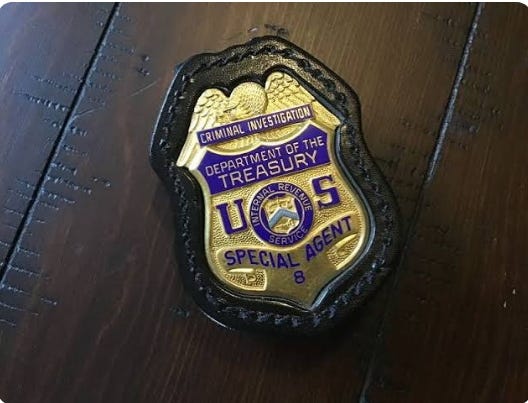
Joseph Banister joined the IRS Criminal Investigation Division in 1993 as a special agent after earlier work as a certified public accountant. He carried a firearm and investigated serious tax violations, including those involving organized crime. While still employed, he researched claims he encountered that the federal income tax lacked legal foundation for most wage earners. Over roughly two years he compiled a lengthy memorandum, reported at about 95 pages, laying out his conclusions. He submitted it to his supervisors in early 1999. Agency officials reviewed it at higher levels, declined to engage the substance of the questions, placed him on administrative leave, and provided paperwork for resignation. Banister submitted his resignation letter dated February 25, 1999, addressed to the IRS Commissioner. He has stated that he viewed continued service as incompatible with his oath.
Banister’s Principal Arguments
Banister’s core contentions, later expanded in a self-published report and public presentations, include three recurring claims.
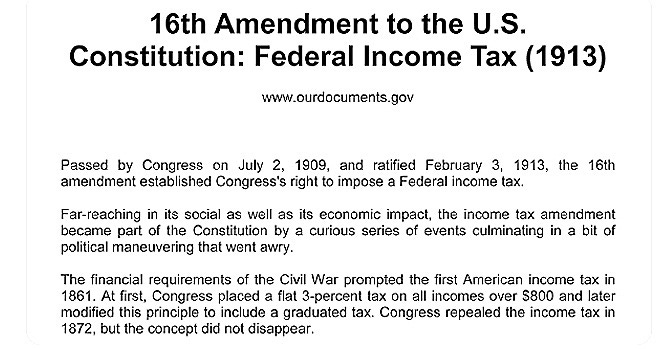
First, he maintains that the system operates through “voluntary compliance” in a way that renders payment optional for most people rather than mandated by statute. Second, he asserts that the Sixteenth Amendment was never properly ratified by the required number of states and therefore supplies no authority for a non-apportioned income tax. Third, he advances the “Section 861” reading, under which Internal Revenue Code sections 861 through 865 allegedly limit taxable income to certain foreign-source categories and exclude ordinary domestic wages of U.S. citizens and residents. He has also argued that individuals create liability only by filing returns. These positions appear in his materials and public statements; they have not been accepted by any federal court as a basis for non-compliance.
Statutory Basis for the Income Tax
The legal framework begins with Article I, Section 8 of the Constitution, which grants Congress power to lay and collect taxes. The Sixteenth Amendment, certified as ratified in 1913, removed the apportionment requirement for taxes on incomes “from whatever source derived.”
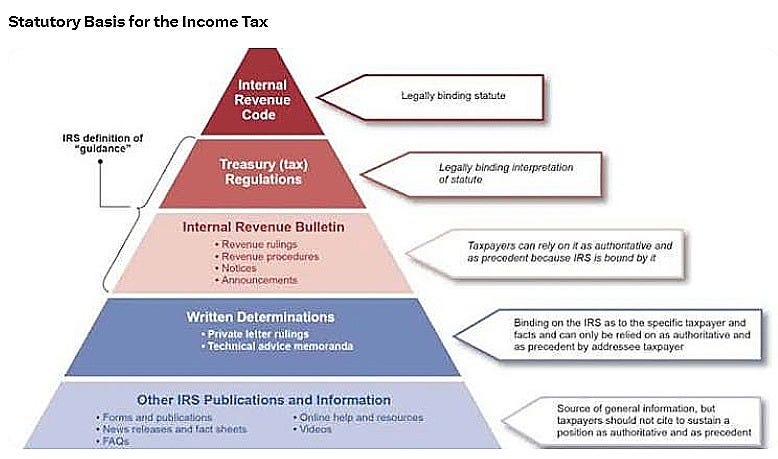
Congress enacted the modern income tax in the Revenue Act of 1913. That statute and its successors are codified in Title 26 of the United States Code, the Internal Revenue Code. Section 1 imposes tax on the taxable income of individuals. Section 61 defines gross income as “all income from whatever source derived,” including compensation for services. Section 6012 requires filing by those whose gross income meets statutory thresholds. Section 6151 requires that the tax shown on a return be paid at the time the return is due. Sections 861–865 address sourcing rules used primarily to allocate income between domestic and foreign categories and to prevent double taxation; they do not exempt domestic wages from the tax imposed by Section 1. Federal courts have repeatedly stated that these provisions create a mandatory duty.

Judicial and Administrative Rejection
Federal courts have uniformly rejected the arguments Banister advanced. Decisions hold that “voluntary compliance” describes the self-assessment method of reporting, not an option to refuse payment; the Secretary of the Treasury retains authority for involuntary collection.
Challenges to the Sixteenth Amendment’s ratification have been dismissed on the grounds that the required number of states approved it and that subsequent Supreme Court cases, including Brushaber v. Union Pacific Railroad Co. (1916), upheld the tax. The Section 861 contention has been labeled frivolous in multiple Tax Court and appellate opinions because those sections do not define or limit gross income under Section 61. The IRS publishes a recurring document, “The Truth About Frivolous Tax Arguments,” cataloguing these and similar claims together with the case law rejecting them. Penalties for frivolous submissions under Section 6702 and for aiding understatement under Section 6701 have been applied in related contexts.
Criminal Acquittal, Civil Consequences, and Client Outcomes
In 2004 a federal grand jury indicted Banister and a client, Walter Thompson, on conspiracy and false-return charges arising from amended returns that claimed no tax was due and sought refunds.
Thompson, who stopped withholding employment taxes from workers at his California manufacturing business, was convicted on multiple counts and sentenced to six years in prison. Banister was tried separately in the Eastern District of California. On June 23, 2005, a jury returned not-guilty verdicts on all four counts against him. The acquittal turned on the government’s burden to prove willfulness and specific intent to defraud; it did not establish that the underlying legal theories were correct. Separately, an administrative law judge ordered Banister disbarred from practice before the IRS in December 2003 for providing erroneous advice; the Treasury Department affirmed the disbarment in 2004. The California Board of Accountancy later revoked his CPA license. Banister has faced civil penalties under Section 6701 that were upheld on appeal. He has reported that he has not filed personal income tax returns since leaving the IRS.
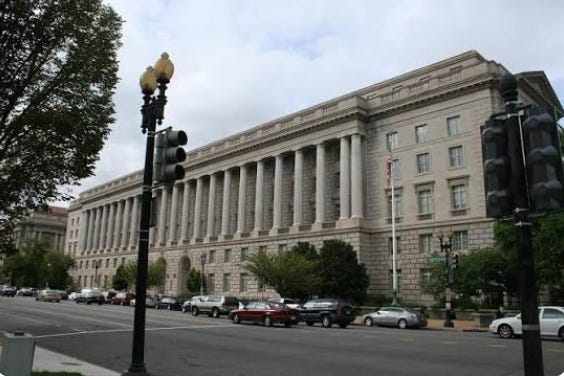
IRS Operational Capacity
Recent staffing reductions and technology constraints have affected IRS performance independent of any individual protester claims. The agency reduced its workforce by more than a quarter in the period leading into 2025, with further attrition leaving headcount roughly flat after limited hiring.
Processing of paper returns slowed because critical scanning systems were not ready at the start of the 2026 filing season; experienced IT staff losses delayed necessary updates. Correspondence and amended-return backlogs have grown. The IRS has expanded use of automation and artificial intelligence for selected tasks, yet independent reviews note that paper-based processes and customer-service capacity remain constrained. These operational facts do not alter the statutory duty to file and pay; they describe administrative capacity.
FEATURED VIDEO
Banister’s account correctly records that his supervisors did not provide a point-by-point rebuttal of his memorandum and instead facilitated his exit. The broader record shows that the same questions have been answered in published court opinions and IRS guidance for years.
Individuals who rely on the rejected theories have incurred civil penalties, professional sanctions, and, in some cases, criminal convictions.
The legal requirement to pay federal income tax rests on the Internal Revenue Code and the Sixteenth Amendment, not on the presence or absence of a single sentence labeled “you must pay.”
.
SOURCES:
https://www.agentfortruth.com/about-joe
https://www.irs.gov/businesses/small-businesses-self-employed/anti-tax-law-evasion-schemes-law-and-arguments-section-i
https://www.irs.gov/privacy-disclosure/the-truth-about-frivolous-tax-arguments-section-i-d-to-e
https://www.nytimes.com/2005/06/24/business/protesters-win-a-case-over-irs.html
https://storage.courtlistener.com/pdf/2015/01/12/joseph_r._banister_v._commissioner.pdf
https://www.irs.gov/pub/irs-news/ir-04-005.pdf
https://apnews.com/article/fact-check-IRS-tax-filing-season-976282774042
https://www.law.cornell.edu/uscode/text/26/1
https://www.law.cornell.edu/uscode/text/26/61
https://www.law.cornell.edu/uscode/text/26/6012
https://www.law.cornell.edu/uscode/text/26/6151
#thebrutaltruthnewspodcast #substack #IncomeTaxLaw #IRSEnforcement #TaxProtesterClaims
FAIR USE COPYRIGHT NOTICE:
substack.com/@originalbrutaltruth OCTOBER 2026 The Copyright Laws of the United States recognizes a “fair use” of copyrighted content. Thank you all for subscribing. If you enjoy and feel the information shared here is important, please share it!
The videos and YouTube channel in general may contain certain copyrighted works that were not specifically authorized to be used by the copyright holder(s), but which we believe in good faith are protected by federal law and the fair use doctrine for purposes such as criticism, comment, news reporting, teaching, parody, or research, is not an infringement of copyright. All video is for educational purposes only. We believe this constitutes a fair use of any such copyrighted material as provided for in section 107 of the US Copyright Law
