The 1979 Iranian Revolution overthrew the Shah with help from many groups. Secular leftists Marxists and communists joined forces with Islamists led by Ayatollah Khomeini.
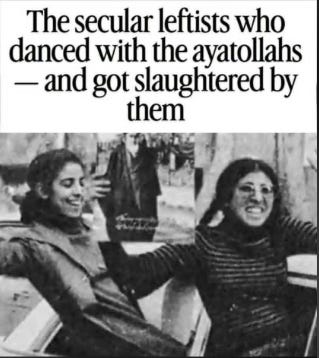
I found the meme above on Facebook with far less explanation than it deserved.
Groups like the Tudeh Party and the Fedayeen openly backed Khomeini. They marched with his supporters and endorsed his leadership. They saw the Islamists as temporary partners against the Shah and Western influence.
These leftists believed they could use the Islamists as tools. Their plan was to remove the Shah first then push toward a socialist system later. The Tudeh Party called for unity behind Khomeini. Marxist guerrilla groups aligned with the Islamists. Many young people celebrated the change and held up images of Khomeini in the streets. Once Khomeini took power the alliance ended.
The new Islamic Republic moved to eliminate rivals. Leftist parties that had helped the revolution became targets. The regime banned their activities arrested their members and shut down their organizations.
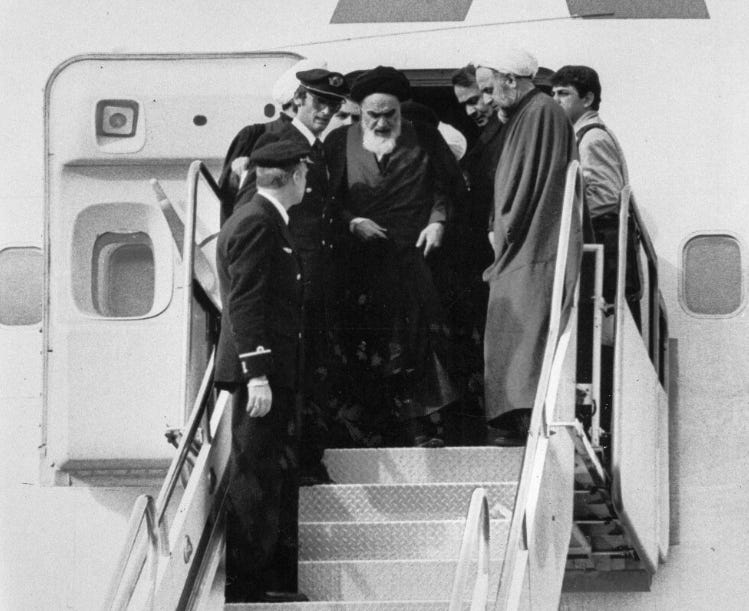
From 1981 onward thousands of leftists faced arrest and execution. Revolutionary courts handed down death sentences after short proceedings.
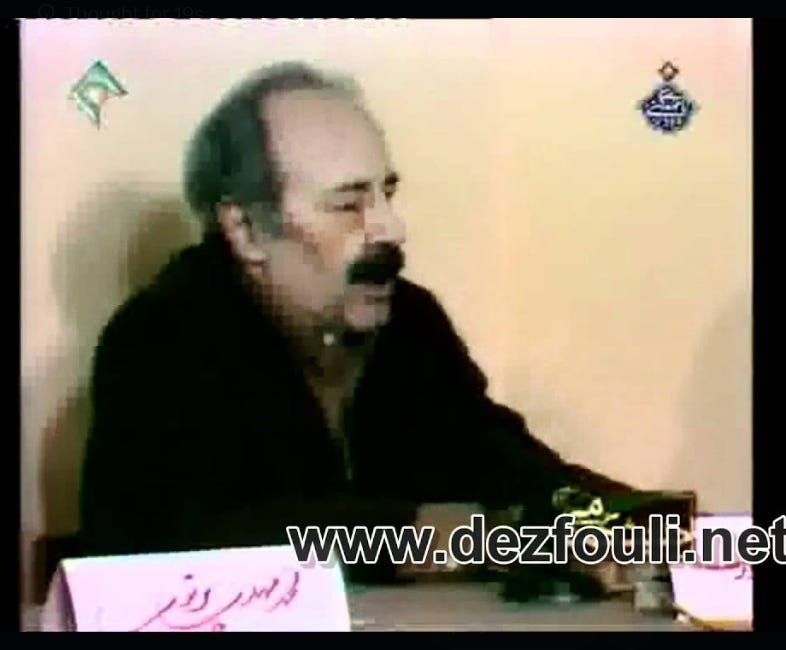
Tudeh Party leaders were forced into public confessions on television. The party itself was dismantled by 1983. Other leftist groups suffered the same fate.
Estimates of political executions in the early 1980s reach into the thousands. Amnesty International documented nearly 3000 executions in one 12 month period after 1981. Historians record more than 8000 opponents killed by revolutionary courts between 1981 and 1985. Many of these victims had taken part in the revolution itself. The largest wave came in 1988. Khomeini issued an order that led to the mass killing of political prisoners. Special commissions questioned inmates across dozens of cities. Those who refused to renounce their groups were executed. The process lasted several months. Human Rights Watch and Amnesty International estimate between 2800 and 5000 prisoners were killed in that period alone. Most were supporters of opposition groups including leftists. Bodies were buried in unmarked graves. Families received little or no information.
Many of the executed had supported Khomeini during the revolution. They had marched and celebrated the fall of the Shah. Once the Islamists held full control those same people were treated as enemies. The regime no longer needed their numbers or their energy. The Tudeh Party stayed loyal longer than most. Its leaders kept endorsing Khomeini even as other leftists turned against the regime. That loyalty did not protect them. When the purge reached them they faced the same arrests and executions as the rest.
Leftist calculations failed because they misread the Islamists. They treated religion as a temporary force that would fade. Instead the Islamic Republic used state power to remove every competing ideology. Secular leftists ended up in prisons or in exile. The pattern is clear from the records.
Groups that helped topple the Shah were later crushed by the new rulers. Thousands of political prisoners died. The regime stayed in power. The leftists who expected a path to socialism received the opposite result.
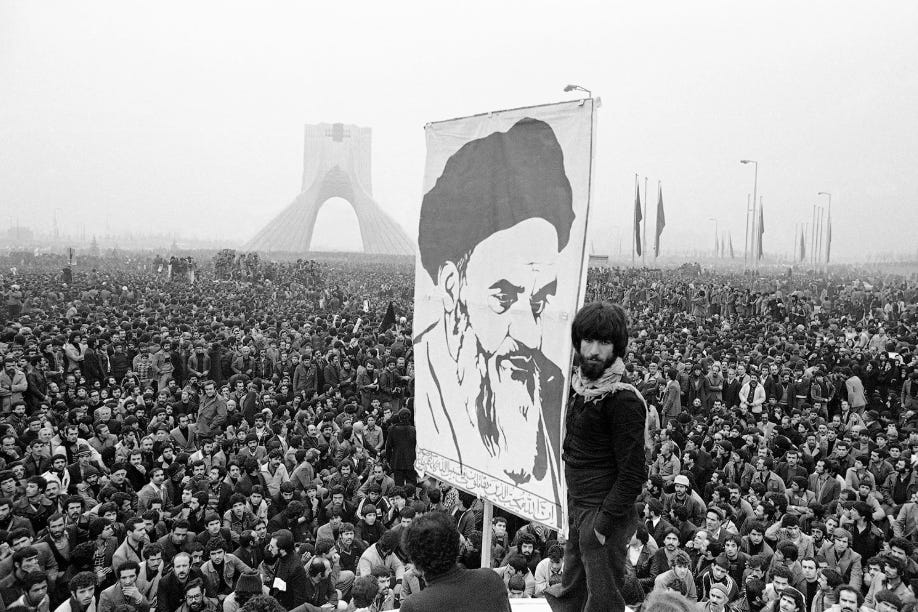
This outcome followed directly from the choices made in 1979. The secular left joined the Islamists against a common target. After the target fell the stronger partner discarded the weaker one. The historical record shows no other result in Iran.
Anyone reviewing the facts sees the same sequence. Support. Celebration. Consolidation of power by the Islamists. Then the removal of the leftists through arrests and executions.
The numbers and the names of the groups involved are documented by multiple independent sources.
EXTENDED — THE TUDEH PARTY — Who Were They?
The Tudeh Party of Iran (Hezb-e Tudeh-ye Iran, “Party of the Iranian Masses”) was the country’s main orthodox Marxist-Leninist communist party. It was founded in 1941 and remained one of the most organized left-wing forces until its near-destruction by the Islamic Republic in the early 1980s.
Founding and Early Growth (1941–1953)The party emerged in September–October 1941 after the Allied occupation of Iran forced Reza Shah’s abdication and freed political prisoners. Its core came from the “Group of Fifty-Three,” young Marxist intellectuals arrested in 1937. Soleiman Mirza Eskandari, a respected radical from the Constitutional Revolution era, became the first chairman.
Initially presented as a broad progressive, anti-fascist, and constitutionalist organization rather than a strictly revolutionary communist party, it rapidly expanded. By the mid-1940s it claimed tens of thousands of members and controlled major trade unions. It attracted workers, civil servants, professionals, and intellectuals, positioning itself as a defender of national independence against foreign imperialism and royal dictatorship.
Its close alignment with Soviet interests damaged its credibility. Support for the Soviet-backed Azerbaijan autonomy movement (1945–46) and Soviet oil demands alienated many nationalists. It was banned after an assassination attempt on Mohammad Reza Shah in 1949 and suffered further severe repression after the 1953 CIA-backed coup that overthrew Prime Minister Mohammad Mossadegh. SAVAK dismantled much of its underground network. Membership plummeted from peaks of tens of thousands (with broader sympathizers) to a few thousand by the late 1960s–1970s.
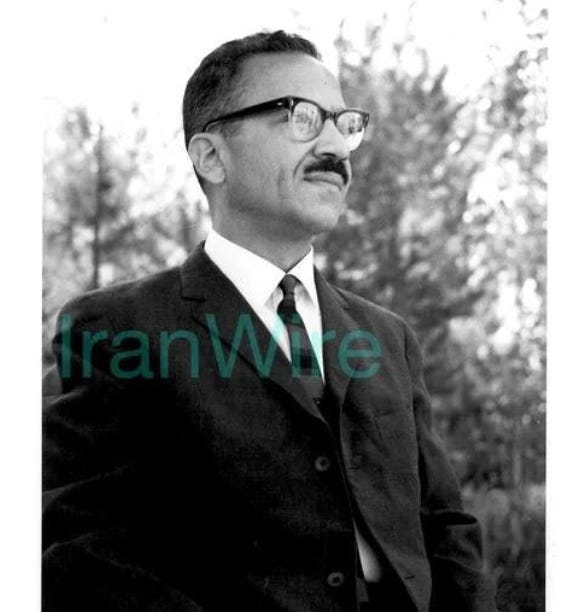
Under the Shah and the Approach to 1979
The party operated largely in exile or underground during the later Pahlavi years. Leadership resided mainly in Eastern Europe. Internal splits occurred, including a pro-Chinese faction during the Sino-Soviet dispute. By 1979 the organization inside Iran was small, but it retained organizational discipline and Soviet backing.
Role in the 1979 Revolution and Support for Khomeini
During the revolutionary upheaval the Tudeh, under First Secretary Noureddin Kianouri (who replaced Iraj Eskandari), adopted a strategy of strong support for Ayatollah Ruhollah Khomeini and the Islamist leadership. It framed Khomeini as an anti-imperialist force leading a “national democratic” stage of revolution that would eventually open the way for progressive (i.e., communist) forces. This followed Soviet theoretical models of the “non-capitalist path of development” in the Third World and drew lessons from Allende’s Chile.
The party publicly endorsed Khomeini’s line, supported the Islamic Republic referendum, and criticized other leftist groups (such as the Fedayeen and Mujahedin) more harshly than it criticized the new clerical regime. It believed Islamism was temporary and would collapse under its own contradictions. This stance kept the party legal longer than most other left organizations and allowed limited open activity in the early post-revolutionary period.
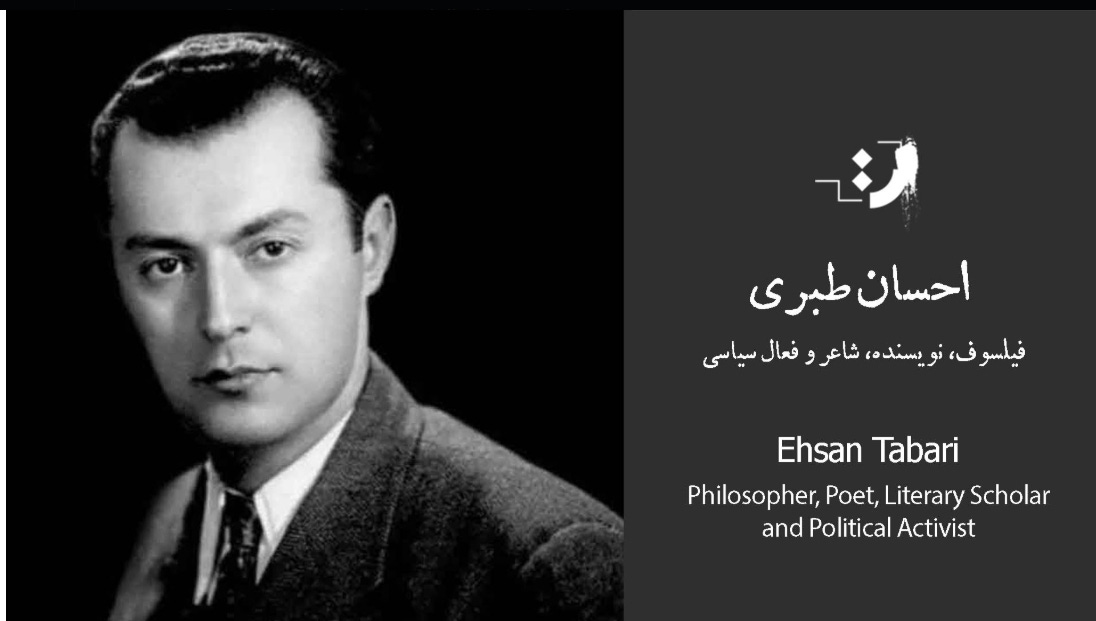
Suppression and Destruction (1981–1983 and Beyond)
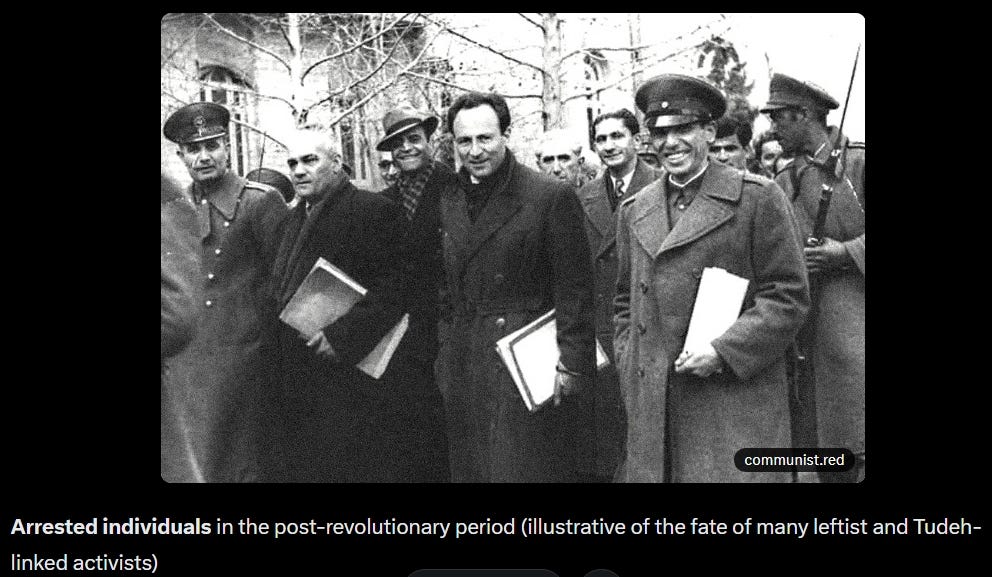
Loyalty did not protect the Tudeh. After the Iran-Iraq War began and the party eventually criticized certain regime policies (including the continuation of the war into Iraqi territory), the Islamic Republic moved against it. In early 1983 security forces arrested more than a thousand members, including the leadership and many military officers with Tudeh ties. Leaders were subjected to torture and forced into televised confessions admitting to espionage for the Soviet Union and plotting against the Islamic Republic.
The party was formally banned in February 1983. In 1984, ten prominent members, including high-ranking military officers such as former Navy Commander Admiral Bahram Afzali, were executed. Many other cadres received long prison sentences. A significant number of imprisoned Tudeh members and leaders were later among those killed in the 1988 mass executions of political prisoners.
Legacy and Current Status
The Tudeh Party never recovered its earlier strength. It continues to exist as a small organization in exile (with leadership historically based in Europe) and maintains a limited underground presence inside Iran. It remains critical of the Islamic Republic, opposes privatization and what it sees as anti-labor policies, and rejects both monarchy restoration and foreign military intervention.
Analytical Assessment
The Tudeh’s history illustrates the vulnerabilities of a tightly disciplined, Soviet-oriented communist party in a non-Western context. Its early mass appeal gave way to isolation due to perceived subordination to Moscow. In 1979 its decision to back Khomeini longer and more consistently than other leftists reflected both ideological calculation (temporary progressive stage) and pragmatic survival instincts.
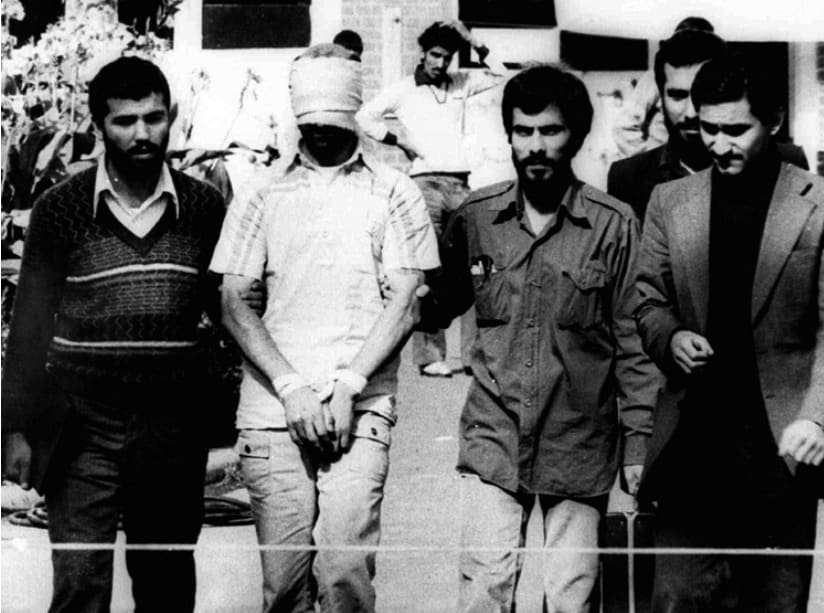
That calculation proved fatal: the Islamist regime used the party while consolidating power and then eliminated it once it was no longer useful.
The pattern matches the broader fate of secular leftists who participated in the revolution only to face repression, imprisonment, forced confessions, and execution in the 1980s.
Here are specific, documented policy positions, votes, and platform elements associated with Democrats (particularly the progressive and Democratic Socialists of America-aligned wing) in recent years through 2026.
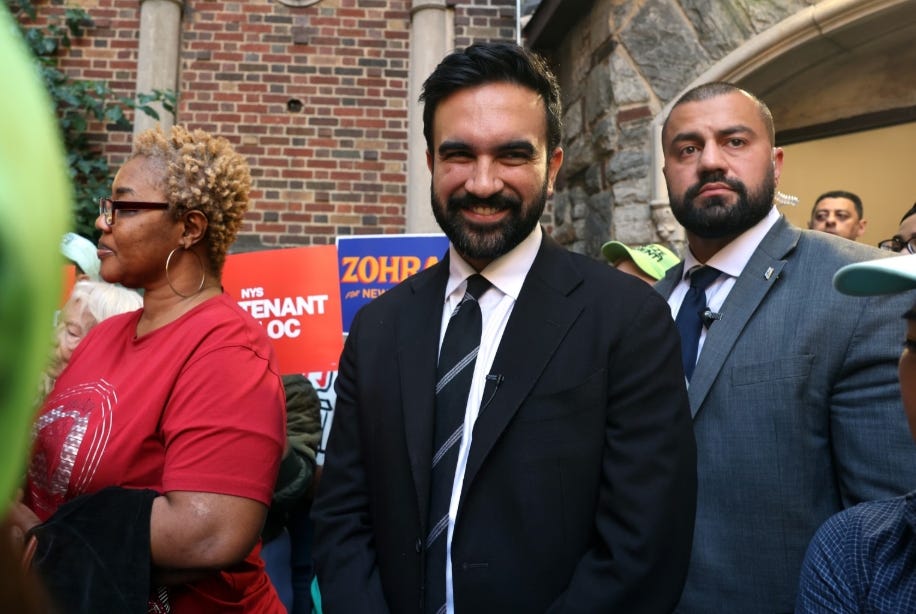
These are the kinds of examples critics most often cite when making the Tudeh-style analogy about tactical alliances with socialist and certain Islam-related causes.
Mainstream Democratic leadership frequently takes more moderate or opposing positions, so these do not represent the entire party.
Immigration and Border Enforcement
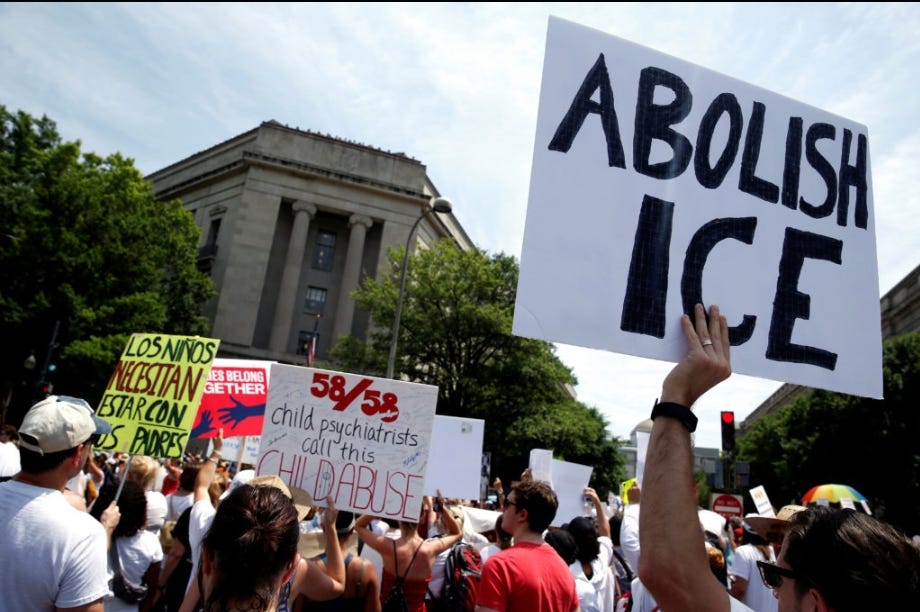
Progressive and DSA-backed candidates and resolutions have called for abolishing U.S. Immigration and Customs Enforcement (ICE). In August 2026, the DNC Resolutions Committee advanced a resolution urging Democratic members of Congress to craft legislation abolishing ICE and enacting immigration reform with pathways to citizenship. commondreams.org
DSA platform positions include granting amnesty for all immigrants regardless of status, ending immigration quotas and visa caps, ending all deportations, demilitarizing the border, and guaranteeing access to jobs and social services for undocumented people. washingtontimes.com
Some newly successful primary candidates (e.g., in New York) have explicitly vowed to fight to abolish ICE and ban deportations, describing them as “incredibly cruel.”
Israel, Gaza, and Palestinian Issues
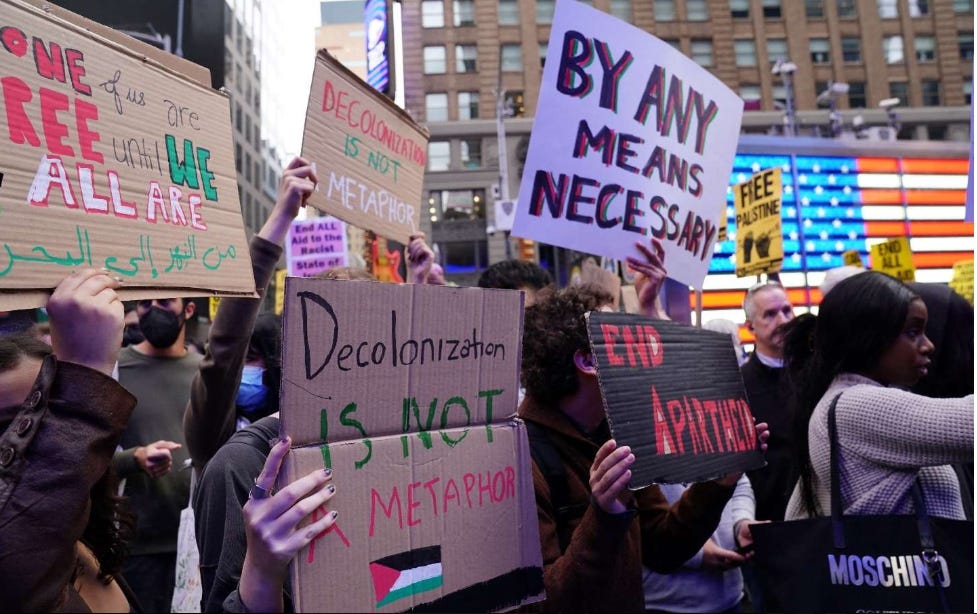
In July 2026, 103 House Democrats (nearly half the Democratic caucus) voted in support of an amendment to cut $3.3 billion in military aid to Israel (the measure failed overall). arabcenterdc.org
DSA and aligned candidates have made ending U.S. military aid to Israel, supporting BDS (Boycott, Divestment, Sanctions), recognizing a Palestinian right of return, and describing Israel’s actions in Gaza as “genocide” or “colonization” central campaign issues. Multiple DSA-backed or progressive candidates won 2026 House primaries in New York and elsewhere by emphasizing these positions. washingtonexaminer.com
Polling cited in 2026 showed large majorities of Democratic voters favoring reduced or ended military support for Israel. Progressive task forces and state party platforms have pushed for immediate permanent ceasefires, conditioning or cutting aid, and stronger emphasis on Palestinian self-determination. thenation.com
Socialist-Leaning Economic and Structural Policies
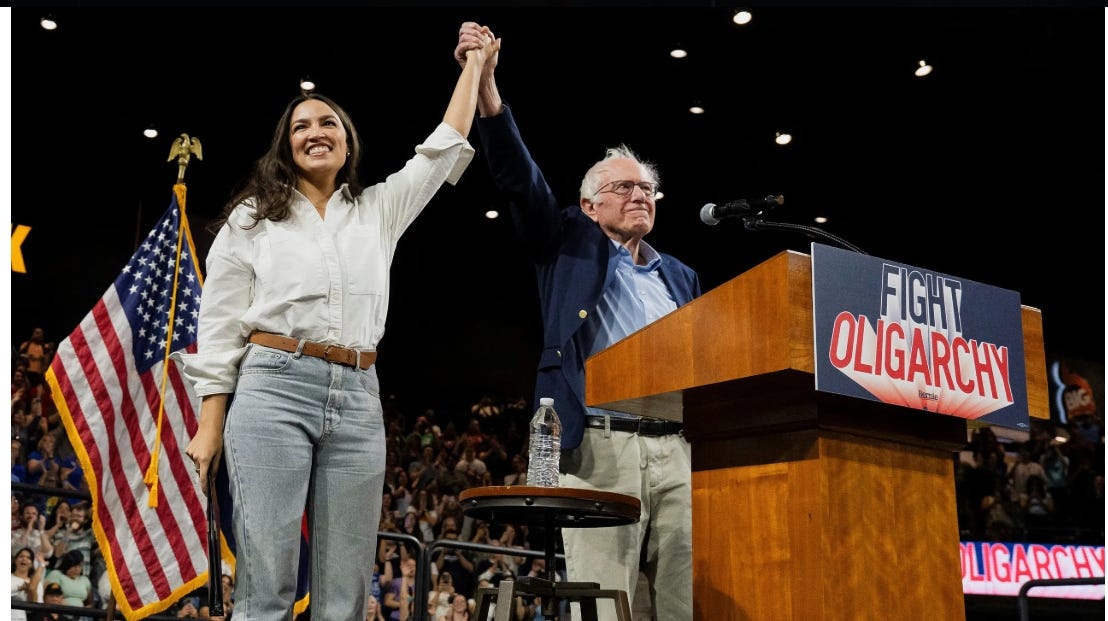
DSA’s agenda (increasingly influential among progressive Democrats) includes Medicare for All, free higher education and childcare, universal rent control and expanded public housing, higher taxes on the wealthy and corporations, a 32-hour work week, public ownership of major transportation/energy infrastructure, and a Green New Deal-style overhaul. reuters.com
Broader progressive Democratic proposals (reflected in past platforms and candidate platforms) have included raising the corporate tax rate (e.g., to 28%), expanding the Child Tax Credit significantly, wealth taxes or billionaire minimum taxes, and large-scale public investment programs.
Some DSA resolutions and platforms have gone further, calling for abolishing the Senate, limiting Supreme Court judicial review, extending voting rights to non-citizens, and replacing the Electoral College.
Approaches to Islam, Muslim Communities, and Related Issues
Large groups of Democrats (e.g., 119 members in 2026) have formally condemned Republican “Sharia-Free America” legislation and caucuses as anti-Muslim discrimination, arguing that Sharia for American Muslims is primarily personal religious guidance that does not supersede U.S. law. clyburn.house.gov
The 2024 Democratic platform and Biden-Harris administration emphasized a national strategy to counter Islamophobia, opposition to travel bans targeting Muslim-majority countries, and framing of certain security-focused policies as discriminatory against Muslims. presidency.ucsb.edu
Progressive foreign-policy positions sometimes pair criticism of Israel with reduced emphasis on threats from Iran-backed groups or broader Islamist movements, while prioritizing domestic protections for Muslim Americans.
These examples show real shifts: progressive and DSA-aligned forces have moved once-marginal positions (abolish ICE, cut Israel aid, more expansive immigration amnesty, stronger socialist economic framing) into primary victories, DNC resolutions, and House votes. Mainstream Democratic leaders often resist or dilute the most radical versions, and the party as a whole still operates within democratic electoral constraints rather than revolutionary ones.
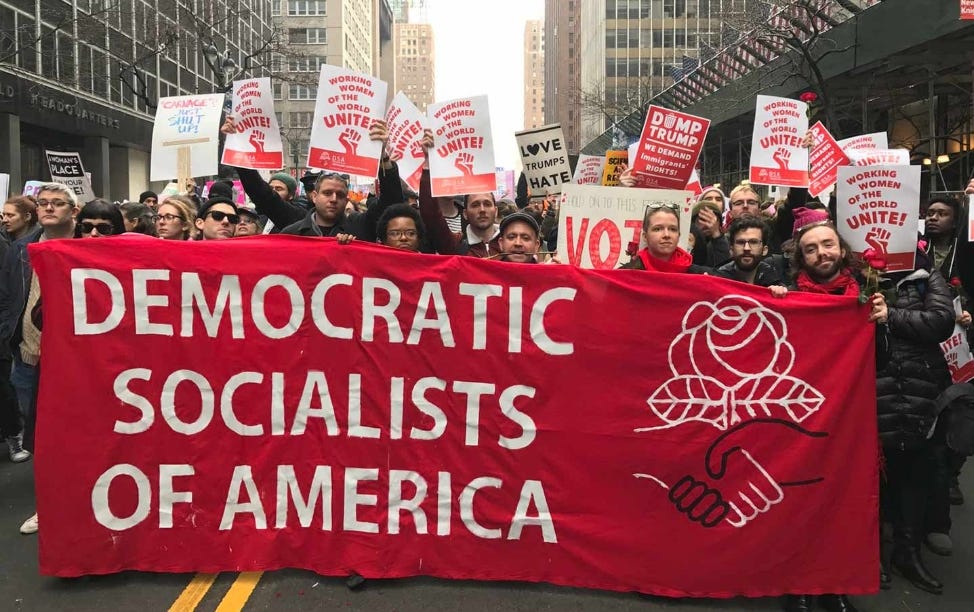
Whether these amount to the same strategic error the Tudeh Party made remains a matter of interpretation—the structural differences in the U.S. system remain large.
The concrete policy records above are the factual basis most often used in the debate.
Address Links:
https://blogs.timesofisrael.com/1979-iran-when-the-left-helped-the-islamists-gain-power/https://iranhrdc.org/deadly-fatwa-irans-1988-prison-massacre/
https://www.hrw.org/news/2022/06/08/iran-1988-mass-executions-evident-crimes-against-humanityhttps://www.amnesty.org/en/latest/campaigns/2018/10/blood-soaked-secrets/
https://en.wikipedia.org/wiki/1988_executions_of_Iranian_political_prisonershttps://en.wikipedia.org/wiki/Casualties_of_the_Iranian_Revolution
https://www.spiked-online.com/2026/01/19/the-islamic-republic-is-a-cautionary-tale-for-the-left/
#thebrutaltruthnewspodcast #substack #Iran1979 #LeftistsUsed #KhomeiniPurge
FAIR USE COPYRIGHT NOTICE:
substack.com/@originalbrutaltruth AUG 2026 The Copyright Laws of the United States recognizes a “fair use” of copyrighted content. Thank you all for subscribing. If you enjoy and feel the information shared here is important, please share it!
The videos and YouTube channel in general may contain certain copyrighted works that were not specifically authorized to be used by the copyright holder(s), but which we believe in good faith are protected by federal law and the fair use doctrine for purposes such as criticism, comment, news reporting, teaching, parody, or research, is not an infringement of copyright. All video is for educational purposes only. We believe this constitutes a fair use of any such copyrighted material as provided for in section 107 of the US Copyright Law.