CERN Particle Research Continues Strong During Major LHC Upgrade Suggested
ISOLDE-AWAKE-SHiP-FASER & DUNE Prototypes - Neutrino Sciences Advance at CERN Despite Beam Pause

Large Hadron Collider at CERN stopped running on June 29, 2026. This was not a sudden stop or surprise event. It marked the start of a planned long shutdown called LS3. Teams are now carrying out major maintenance and upgrades across the accelerator complex.
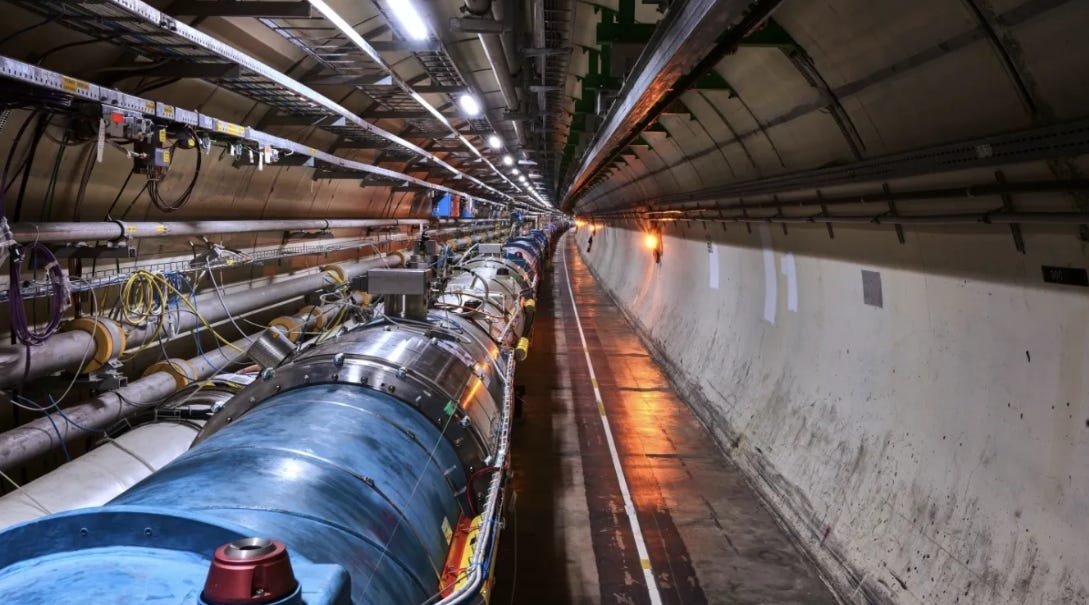
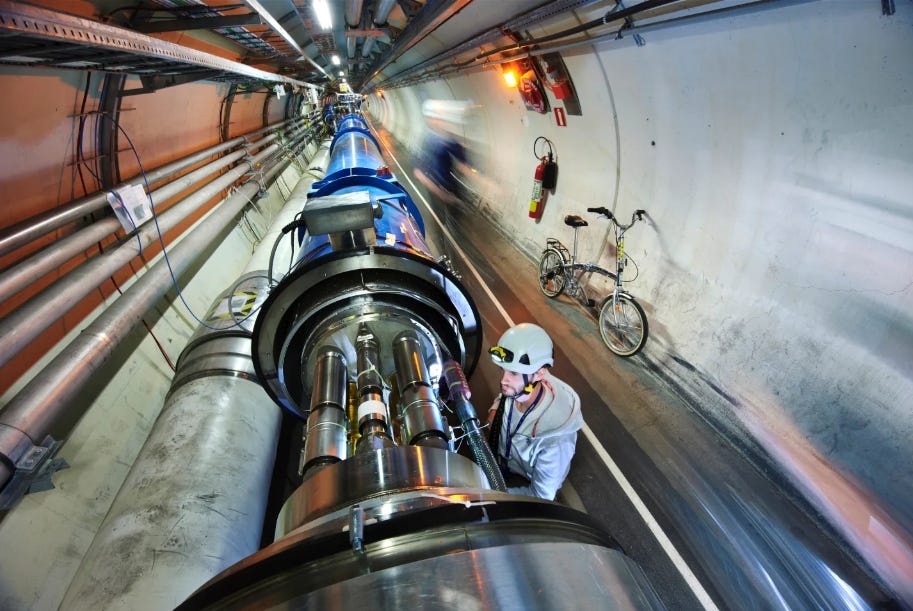
The LHC is a huge circular machine that speeds up protons to nearly the speed of light and smashes them together. These collisions help scientists study the smallest pieces of matter and the forces that hold everything together. After years of successful runs, the machine needs work to become even more powerful.
This upgrade turns the LHC into the High Luminosity LHC. The goal is to create many more particle collisions in the future. More collisions mean more data. More data gives scientists a better chance to spot rare events or new particles that are hard to find now. The upgraded machine is set to start running around 2030. The shutdown is a standard part of running large scientific machines. Big accelerators go through long periods of upgrades every few years. CERN announced this plan years in advance. Official documents and updates from the lab describe the work in clear detail. There is no sign that the pause hides other activities.
While the main collider ring is quiet, CERN has many other projects and facilities. Work continues on upgrades, data analysis from past runs, and preparations for future experiments. Thousands of scientists around the world stay busy with these efforts.
ISOLDE is one key facility getting major improvements right now. It produces beams of radioactive atoms to study the structure of atomic nuclei. Scientists use it to learn about how elements form in stars and to develop better medical isotopes. During LS3, teams have already removed old beam dumps and are building new ones. They are also raising the energy of the proton beam that feeds the facility. These changes will let ISOLDE produce stronger and cleaner beams for more precise studies.
AWAKE explores a new method of speeding up particles. It uses a plasma created by a laser and a proton beam to form wakefields that can push electrons to high energies over short distances. This approach could one day lead to much smaller and cheaper accelerators. AWAKE began its own upgrade work earlier. Teams are dismantling old equipment and preparing for the next phase of tests once beams return.
SHiP is a planned experiment designed to search for hidden sector particles. These are particles that interact very weakly with ordinary matter. They could help explain dark matter or other unsolved problems in physics. SHiP will use a high intensity proton beam dumped into a target. During the current shutdown, CERN is transforming an existing underground cavern called ECN3 into the site for this new Beam Dump Facility. Construction and planning work is moving ahead so the experiment can start taking data in the early 2030s.
FASER sits in a side tunnel near one of the LHC collision points. It looks for particles that travel forward and live long enough to reach it. The experiment also studies high energy neutrinos produced in the collisions. With the LHC off, no new collision data is coming in. However, scientists are analyzing the large amount of data already collected during previous runs. They are also preparing the detector for the higher intensity conditions of the upgraded machine.
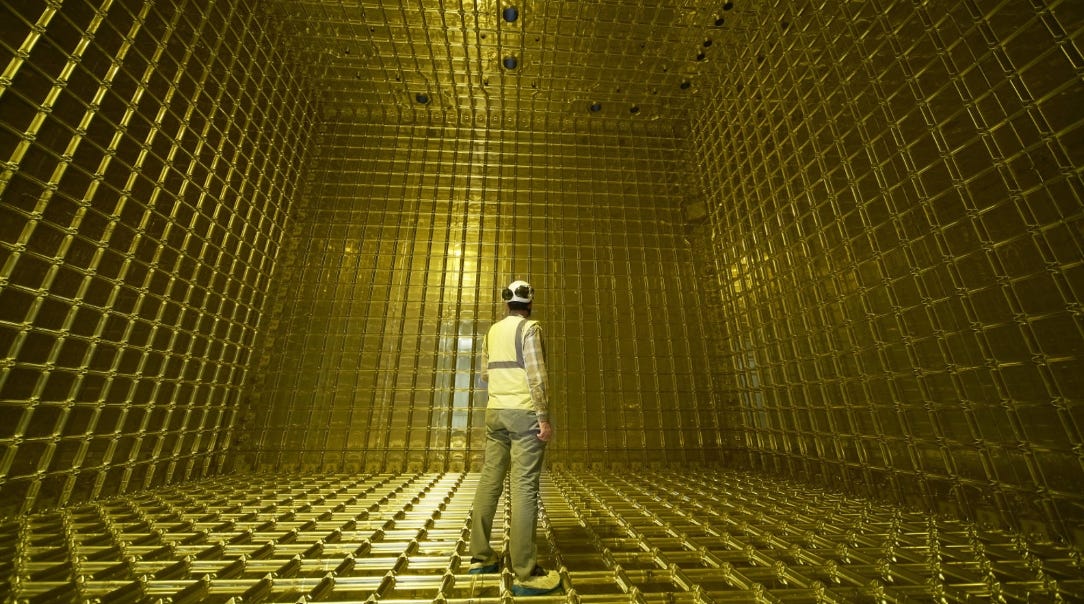
DUNE is a large international neutrino experiment under construction in the United States. CERN hosts prototype detectors called ProtoDUNE that test the technology using test beams from the accelerator complex. These prototypes have already collected useful data in past years. During the shutdown period, work focuses on analyzing that data and planning future test runs. Neutrino studies help scientists understand the early universe and why there is more matter than antimatter.
Particle physics research does not depend only on the big collider running nonstop. Much of the progress comes from careful analysis of existing data by large international teams. Upgrades at facilities like ISOLDE and preparations for new experiments like SHiP keep the overall program moving. Data from earlier LHC runs continues to yield new results even while the machine is quiet.
The questions about whether the shutdown is just routine maintenance or something else deserve clear answers. Official schedules show this is a long planned upgrade to increase performance. The work involves thousands of experts from many countries and is documented publicly. Complementary experiments targeting hidden particles and other frontiers are advancing on their own timelines. Claims of distraction lack supporting evidence from the lab records or published plans.
Future runs with the upgraded machine will collect far more data than before. This increases the chances of finding signs of new physics beyond the current best theory, called the Standard Model.
Experiments like SHiP and upgraded versions of FASER will search in different ways that complement the collider work. Together these efforts cover a wide range of possibilities.
CERN remains one of the leading centers for fundamental research. The current period shows how large science projects operate in cycles of running, analysis, and improvement. The focus stays on understanding the basic rules of nature through careful measurement and testing.
.
Source Links:
https://home.cern/cern-bids-farewell-to-the-lhc-and-enters-long-shutdown-3/
https://home.cern/science/long-shutdown-3/
https://home.cern/ship-sets-sail-explore-hidden-sector/
https://home.cern/science/accelerators/awake/
https://home.cern/science/experiments/faser/
https://cerncourier.com/a/ship-to-chart-hidden-sector/
https://home.cern/science/long-shutdown-3/ (ISOLDE section) All information comes from official CERN publications and recent updates as of July 2026. The content reflects documented plans and activities without added speculation.
#thebrutaltruthnewspodcast #substack #news #science #cernawakeshipdune #cern
FAIR USE COPYRIGHT NOTICE:
substack.com/@originalbrutaltruth JULY 2026 The Copyright Laws of the United States recognizes a “fair use” of copyrighted content. The videos and YouTube channel in general may contain certain copyrighted works that were not specifically authorized to be used by the copyright holder(s), but which we believe in good faith are protected by federal law and the fair use doctrine for purposes such as criticism, comment, news reporting, teaching, parody, or research, is not an infringement of copyright. All video is for educational purposes only. We believe this constitutes a fair use of any such copyrighted material as provided for in section 107 of the US Copyright Law.