A Simple Design That Warps Data Collection Without Hiding Identity
Lens Mask Distorts Faces for Cameras But Not for People

Transparent Mask Fights Back Against Facial Recognition Tracking
Facial recognition technology watches people in many public places today. Cameras linked to computers scan faces in crowds and match them to records or names. Most people do not notice this happening as they walk by stores or streets.
Governments and big companies collect this face data. They use it for security but also to track shoppers and build personal profiles. The information goes into large databases that grow every day. Personal privacy shrinks when faces turn into searchable data without clear consent.
This kind of constant scanning creates real problems. People lose control over who sees their face and what happens with that information later. Advertisers and security teams gain power while individuals gain little in return. A product designer from the Netherlands named Jip van Leeuwenstein decided to create something to push back. He worked on the idea as a student at the Utrecht School of the Arts. His project received the name Surveillance Exclusion.
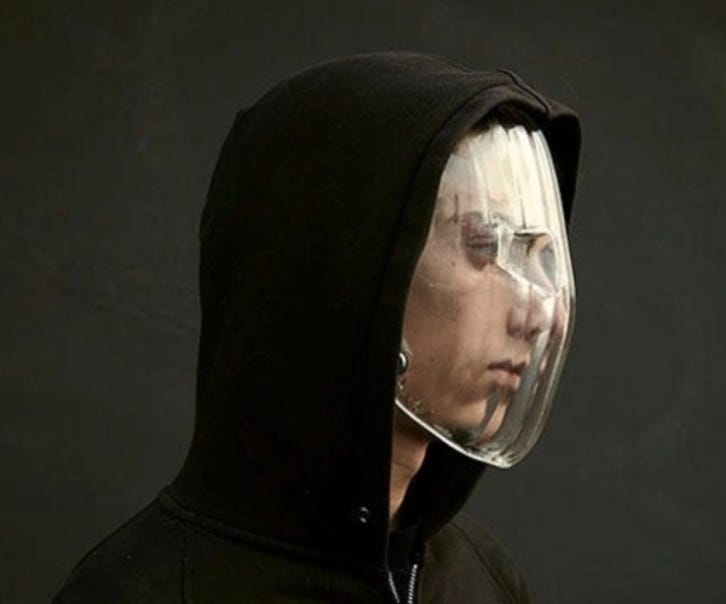
The main creation is a clear mask formed like a curved lens. It has ridges and bends across the surface. The material sits over the face but does not block vision. These curves and bends change how light reaches the camera. They warp the distances between eyes, nose, and mouth. Facial recognition software relies on exact measurements of these points to identify someone. The changes throw off the match. Computers struggle to read the face correctly because the shape no longer matches stored records. The distortion happens from multiple angles in many cases. This gives the wearer a chance to move through watched areas without easy detection by the system.
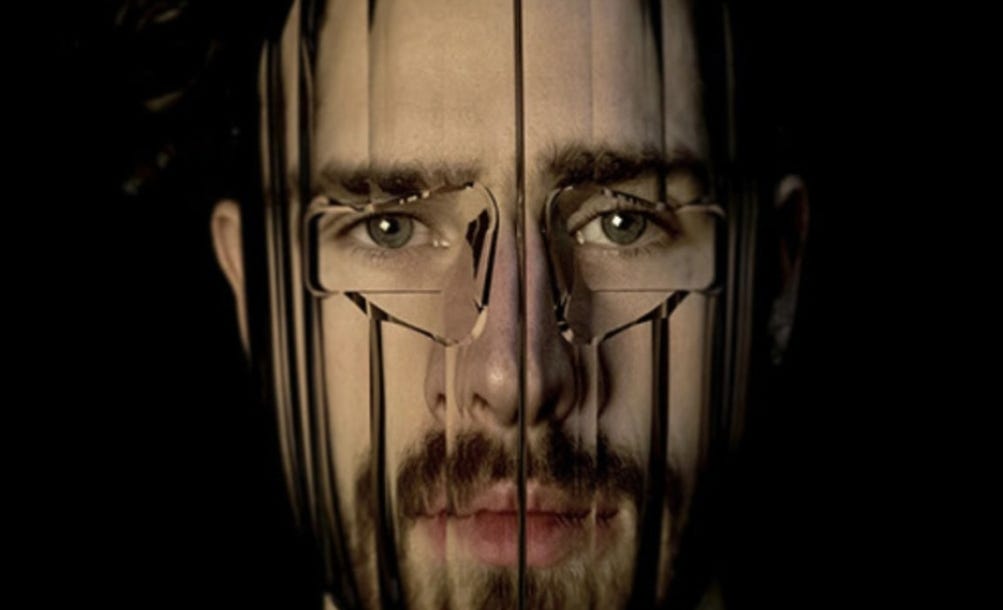
Humans standing nearby see everything normally. The mask stays fully transparent. Expressions remain visible and the person stays recognizable in real conversations.
No one has to hide their face completely to gain some protection. The designer described the goal clearly. The mask aims to make someone hard for software to recognize while keeping normal human interaction possible. It formed part of a larger effort to question how much data gets collected and who controls it. This project dates back to the late 2010s. It started as a student concept and appeared in design exhibitions and articles. It was never turned into a product sold in stores or made in large numbers.
It works best against certain older recognition systems that depend heavily on consistent face geometry. Newer artificial intelligence uses more advanced methods and sometimes extra data like heat or movement patterns. These improvements can reduce how well the mask confuses the software. The idea highlights bigger issues with surveillance. Companies gather face scans to target ads that know personal details. Public cameras record movements across cities with few limits in many areas. Data builds up fast and stays available for years.
Creative responses like this mask show people looking for practical ways to limit tracking. It uses simple physical design instead of electronics or software of its own. The approach stays low cost in concept and avoids blocking everyday life.
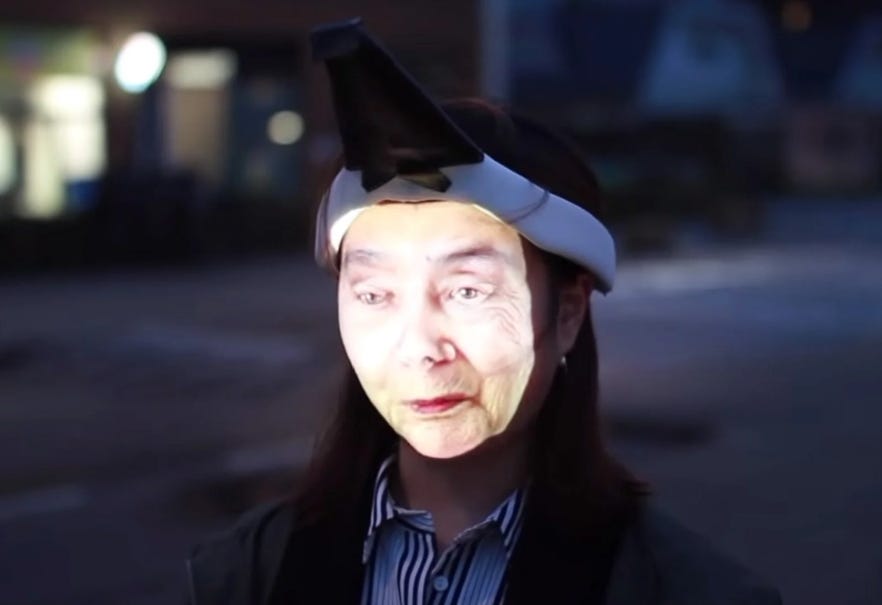
Similar projects exist in the same field of design. Some use patterns on clothing or special lights aimed at cameras. All of them face the same challenge because recognition technology continues to advance and adapt.
No single item solves the full problem of widespread face scanning. Rules and laws around data use matter more in the long run.
Designs like the Surveillance Exclusion mask serve mainly to raise awareness and start discussions about limits on this technology.
The project remains an example of how one person responded to growing surveillance. It proves simple ideas can challenge complex systems even if they do not offer perfect or permanent protection.
.
Source Links:
https://bigthink.com/the-present/facial-recognition/
https://www.snopes.com/fact-check/ai-mask-facial-recognition/
https://popupcity.net/insights/three-ways-to-escape-facial-recognition-in-surveilled-cities/
http://www.jipvanleeuwenstein.nl/
#thebrutaltruthnewspodcast #substack #news #facialrecognition #privacy
FAIR USE COPYRIGHT NOTICE:
substack.com/@originalbrutaltruth JULY 2026 The Copyright Laws of the United States recognizes a “fair use” of copyrighted content. The videos and YouTube channel in general may contain certain copyrighted works that were not specifically authorized to be used by the copyright holder(s), but which we believe in good faith are protected by federal law and the fair use doctrine for purposes such as criticism, comment, news reporting, teaching, parody, or research, is not an infringement of copyright. All video is for educational purposes only. We believe this constitutes a fair use of any such copyrighted material as provided for in section 107 of the US Copyright Law.